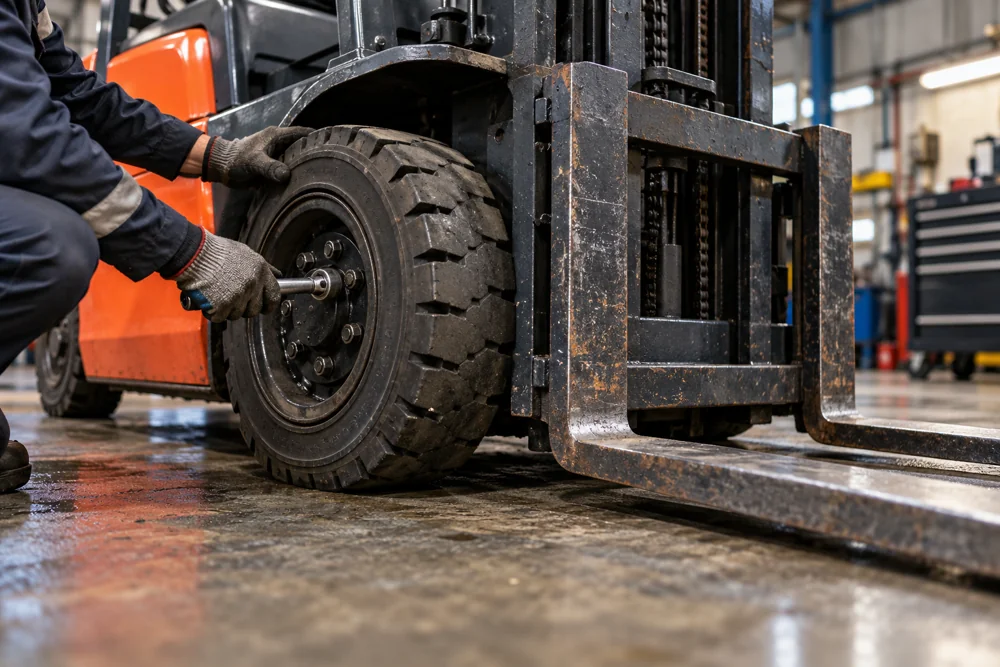
When A Forklift Develops A Fault
A leaking hose, inconsistent brake response or unusual mast movement needs a controlled response. Stop using a truck where a fault could affect safety, keep others away and follow your defect-reporting procedure. Production pressure is not a reason to keep testing a machine with a suspected safety problem.
We help businesses describe forklift repair requirements clearly before an engineer’s attendance is discussed. Record the model, serial number, power type and location, then explain what happened and whether there was an impact or unusual load. Do not dismantle guards, bypass interlocks or keep operating the truck to reproduce the fault.
Useful Information For Diagnosis
A precise symptom is more useful than saying a truck is broken. State whether the machine starts, travels, steers and lifts, and whether the issue happens when cold, warm or under a particular operating condition. Copy any displayed fault code accurately, without clearing it or changing settings.
Photographs can help identify the truck and visible damage if they can be taken without entering a danger area. Include previous repair information and the last service record where available. Be clear about any oil spill, damaged battery connector, distorted fork or tyre issue so the risk can be assessed before arrival.
Hydraulic, Mechanical And Electrical Work
Hydraulic repair may involve tracing leakage, checking hose condition or assessing a cylinder fault. Stored hydraulic energy and suspended components make this work unsuitable for improvised intervention. A competent engineer should determine the safe method, appropriate replacement components and checks needed before the truck is handed back.
Electrical faults can involve the battery, charging system, connections, controls or drive components. An error code is a starting point for diagnosis rather than a complete parts list. Mechanical issues involving brakes, steering, tyres or mast components also need assessment of the underlying cause, especially after impact damage or repeated failure.
The Repair Process
Begin with a fault report and a safe location for the truck. The next step is to confirm attendance arrangements, access requirements and the scope of diagnostic work. Engineer availability, parts supply and the nature of the defect determine the practical repair route, so no completion time should be assumed.
After diagnosis, request a written explanation of the repair, replacement parts and any further checks. Authorise the work before additional cost is incurred. On completion, retain the job record and confirm the release-to-use conditions, including whether a competent person needs to consider a further thorough examination following damage or major repair.
Repair Cost And Temporary Cover
Repair costs depend on investigation time, parts, access, travel and whether workshop facilities or recovery are required. A quotation should distinguish the initial diagnosis from the repair itself. Ask whether parts are new, reconditioned or another agreed specification and what cover applies to the completed work.
If the truck is central to your goods flow, consider temporary hire while the repair is assessed. The replacement still needs to fit your loads and site, even when downtime is inconvenient. Comparing repair scope with remaining condition can also help decide whether a used replacement or longer rental arrangement deserves consideration.
Your Next Steps
- Stop unsafe use and report the fault.
- Supply machine details and agree diagnosis.
- Review the findings and authorise repair.
- Confirm release conditions and retain the job record.
Safety, Maintenance And Your Responsibilities
The Provision and Use of Work Equipment Regulations 1998 (PUWER) and the Lifting Operations and Lifting Equipment Regulations 1998 (LOLER) are relevant to lift trucks at work. Your arrangements should cover suitable equipment, competent operators, maintenance and the required thorough examination.
Servicing does not replace thorough examination. Use HSE’s lift-truck guidance to review your responsibilities, and confirm the specific arrangements with the supplier and your competent adviser before the truck is used.
Forklift Repair Questions
What Should I Do If My Forklift Leaks Oil?
A forklift oil leak should be reported promptly, and the truck should be taken out of use where safety may be affected. Keep people away from the spill and follow the site’s spill and isolation procedures. Do not search for pressurised leaks by hand or continue lifting while waiting for an engineer to assess the defect.
Can You Confirm A Repair Before Seeing The Truck?
A forklift repair can only be scoped accurately after the symptoms and machine details have been assessed, often with on-site diagnosis. A fault code or photograph may help preparation but cannot confirm every failed component. Ask for diagnosis charges, authorisation steps and parts availability to be explained before work starts.
Discuss Your Manchester Site
Share your requirements through our commercial enquiry form. We cover Manchester and nearby business locations, with availability and the scope of each request confirmed before an arrangement is made.